How To Install Kaspersky Antivirus On Netbook
Python Game Programming Code on this page. Most netbooks aren’t blessed with the same excess horsepower as current desktops and conventional laptops. In order to keep your system running to its full potential, it’s important to select applications that are easy on resources. You don’t want to needlessly overwork that Atom processor, do you? One place you can save CPU and RAM usage is your antivirus program.

I’ve found three options that are perfectly suited to netbooks, providing an excellent level of protection while keeping the impact on your system to a minimum. (pictured at top) While it’s not quite as light on Windows XP, if you’ve got a newer Windows 7 netbook (or one of the few running Windows Vista) MSE is an excellent choice. Like other traditional antivirus programs, MSE needs to download definition files to your PC to identify viruses. Scans are fairly fast, can be scheduled, and it’s been tested to detect about 98.5% of malicious files. The most common knock against MSE is its lack of any kind of heuristics-based protection, but the jury is still out on just how effective that type of defense is anyway.
Aug 17, 2011 I have a 3 computer Norton antivirus. I have installed on my 2 laptops and now nd to get on my netbook, as the trial has expired. Not having a CD or DVD drive here is a solution to install Kaspersky without CD Kaspersky Antivirus is also known as the antiviral kit tool which is an antivirus.
RE: lightness on XP. I’ve seen task manager spikes of up to 60% on the CPU and memory usage up to 80Mb total on certain XP systems. It’s not consistent, so if you like what you’ve heard about MSE try it and see how your netbook handles it. Again, on Windows 7 MSE is a winner for its frugality with resources.
I’m currently running Immunet on my system – partially because I wanted to give it a thorough test and partially because I’m flat-out impressed. It’s incredibly light on resources – using less than 5MB of memory on my Windows 7 system. My CPU seldom notices any impact, even when running a scan. I also like the slide-out alerts which inform me whether or not a binary is “trusted.” Immunet is cloud-powered, so there are no definition downloads. The user interface needs a little work, but it’s still in the early stages of development.
In terms of protection, however, I think Immunet is more than capable of keeping the average user’s system safe. The download is less than 5MB, so you won’t even be giving up a sliver of the 160GB SATA drive (or that even smaller SSD) in your netbook. Immunet’s cloud is slowly growing, and I’ve watched it jump from about 19,000 users up to 27,000 in a short time span. It’s well worth a test drive. Panda was first on the scene with a cloud-powered antivirus program, and it’s another good option for netbook users. As with Immunet, CPU utilization is very low and the memory footprint is tiny (about 8MB on my system). Scans are fast, and you’re protected even when disconnected from the Cloud thanks to a local cache of Panda’s signature files.
One big advantage Panda has over Immunet is the size of its user base. Hundred of thousands of eyes watching millions of samples is likely to be more effective than a few thousand after all. Got another solution that runs nicely on your netbook?
Share it with us in the comments! Avast rapes Windows Vista, stealing upwards of 50 MB as it silently runs in the background. I do NOT recommend Avast for any system running less than 2 GB RAM. Avast also slows your internet browsing speed considerably with its real-time Browser Guard scanning bit for bit, anything that comes across your screen.
Ethics And The Conduct Of Business 7th Edition Ppt. Also, Avast may hang FireFox (refuses to close) resulting in CTL-ALT-DEL to terminate FireFox before opening another instance of the browser, this is a known issue with Avast and users running FF 3.5 or better.
If you need help when installing Kaspersky Antivirus, this article should help. If you are unable to install Kaspersky Antivirus, probably you're dealing with malware that prevents security programs from being installed. I recommend you to install this antivirus on a fresh, new installed operating system. I assume that you already downloaded the antivirus setup file. If you did that, locate and open the setup file. When you will execute the setup file, the antivirus files will be extracted and you should see a similar image: This is the well-known ' Welcome' setup window. It is recommended to close all other applications and most important - make sure that you choose ' Change Installation Settings' - this is the same thing with a custom installation.
Make sure that you read and agree with the ' End User License Agreement'. Click on ' I Agree' button to continue. I always accept to participate in - ' Kaspersky Security Network'.
This is a service that helps the developers to improve the security level and minimize false positives so I guess it's in everyone's interest to participate. If you need to install the antivirus on a different location, choose ' Browse' otherwise, leave this untouched and move on. If you're ready to install, click on ' Install' and wait a couple of minutes until everything is ready. As I said, wait a couple of minutes. It took 3-4 minutes to install on my laptop, it depends on your computer resources. As you can see, this window will inform you that the antivirus has been successfully installed.
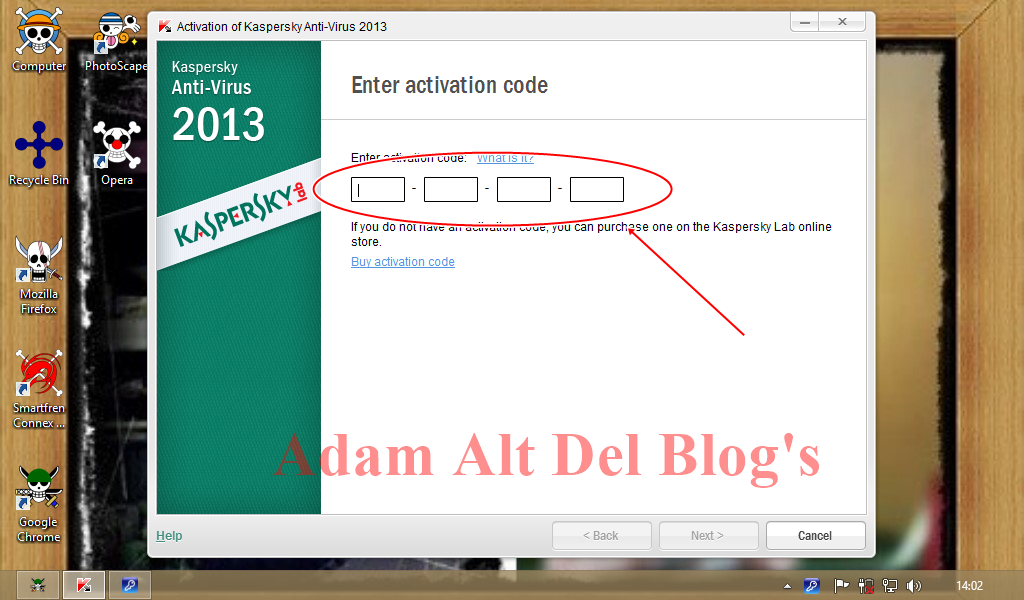
Once you click ' Finish' it will run for the first time. Kaspersky Antivirus is a shareware antivirus however it's fully functional for 30 days. This is the trial period and when it ends you will have to buy a license. If you already purchased a license, enter the activation code. If you don't - that's fine, it will work exactly like an activated version for 30 days. I will choose ' Activate trial version' and click next.
I forgot to mention this: make sure that you have an Internet Connection, the antivirus will connect to one of their servers and it will automatically activate the trial version. Once it finishes you will see the following window: Congratulations, you've just installed Kaspersky Antivirus for the first time. The last image is with the antivirus main interface running for the first time.
There is one more thing to do. You have a button named ' Update'. Click on that button and update the antivirus database. Once it's updated, perform a full system scan.